सासा हाले हाँसा चाले
सी डोरी हाथ
कूप गहंता गंधु बदंता
सो तो जाने नाथ
पोनी पान बिनु आग के आग लगावे
नाथ कहावे
पोनी पान बिनु आग के आग लगावे
नाथ कहावे...
अलख लखावे जोग जगावे
अलख लखावे जोग जगावे
तो सो नाथ कहावे
पोनी पान बिनु आग के आग लगावे
नाथ कहावे
कूप विशंती कहं दिसंती
डोमिन आगे आवे
कूप विशंती कहं दिसंती
डोमिन आगे आवे...
ऊपै सोधे ताही प्रबोधे
तो अमृत रस पावे
ऊपै सोधे ताही प्रबोधे
तो अमृत रस पावे
गहन कोठरी बज्र कीवाड़ा
ता में लागा ताला
ताला खोल के भीतर बैठे
सो तो है गुरु आला...
भीतर बड़ा उजाला भासे
एक मणि धर आगे
देख उजाला भीतर बैठे
जब तो सर्पिणी जागे
कहीं न जावे कहीं न आवे
पुनि अमृत रस पावे
ना सो खट्टा ना सो मीठा
जो चाखे सो जाने...
ना कहीं जावे ना कहीं आवे
सो अंतर ही पावे
बाहर दृष्टि ना जावे अवधू
अंतर ही सब पावे
गुरु ज्ञानी गुरु ध्यानी पावे
अंतर ज्योत बतावे
ज्योत जगावे अंतर पावे
कहं ना आवे जावे...
श्वास का ताला श्वास की चाबी
जो जागे सो खोले
भीतर बैठ के सब कुछ देखे
ना बोले ना डोले
शशा ऊपर सिंह गाजो
देख के नाथ का नाद बाजो
नाद का शब्द चहुँ ओर राजो
देख के सिंह तुरंत भाजो...
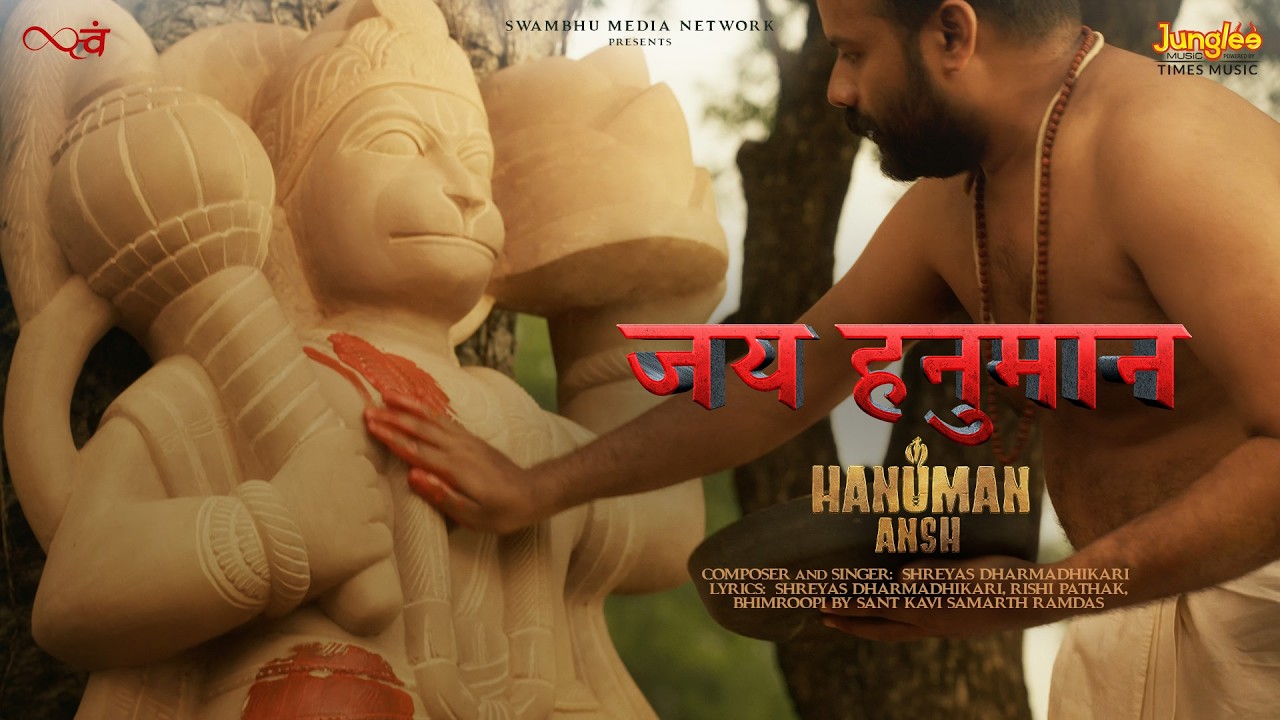
Vaishnav Jan Hanuman Ansh Lyrics
Lyrics Meaning In Hindi
यह पद/भजन नाथ योग की गूढ़ साधना-परंपरा से जुड़ी प्रतीकात्मक भाषा में है। इसमें श्वास, अंतर्मुखी साधना, गुरु, नाद, अमृत-रस, कुण्डलिनी/सर्पिणी और भीतर के प्रकाश जैसे योगिक संकेत हैं। नीचे मैं पंक्ति-दर-पंक्ति सरल हिंदी अर्थ दे रहा हूँ। कुछ शब्द लोक/नाथ परंपरा की बोली में हैं, इसलिए उनके अर्थ संदर्भानुसार समझने चाहिए।
1. “सासा हाले हाँसा चाले…”
सासा हाले हाँसा चाले
सी डोरी हाथ
कूप गहंता गंधु बदंता
सो तो जाने नाथ
सरल अर्थ
यहाँ “सासा” यानी सांस और “हंसा” को जीवात्मा/प्राण के प्रतीक के रूप में लिया जा सकता है।
- सासा हाले — सांस चलती रहती है।
- हाँसा चाले — उसके साथ जीव या प्राण की गति होती रहती है।
- सी डोरी हाथ — इस पूरी जीवन-गति की डोर किसी सूक्ष्म शक्ति/साधना के हाथ में है।
- कूप गहंता… — भीतर एक गहरी अवस्था/रहस्य है, जिसकी अनुभूति सामान्य व्यक्ति नहीं कर पाता।
- सो तो जाने नाथ — उस रहस्य को वही जानता है जिसने नाथ-मार्ग की साधना और अनुभूति प्राप्त की है।
भाव: मनुष्य का जीवन केवल बाहरी शरीर नहीं है। सांस और प्राण के भीतर एक गहरा आध्यात्मिक रहस्य छिपा है।
2. “पोनी पान बिनु आग के आग लगावे…”
पोनी पान बिनु आग के आग लगावे
नाथ कहावे
यह बहुत प्रतीकात्मक पंक्ति है।
यहाँ बिना दिखाई देने वाली बाहरी आग के भीतर अग्नि उत्पन्न होना योगिक साधना की ओर संकेत माना जा सकता है।
- आग के आग लगावे — साधक के भीतर योग की शक्ति/तप की अग्नि जागती है।
- नाथ कहावे — जो इस आंतरिक साधना के रहस्य को जानता है, वह नाथ कहलाता है।
भावार्थ
सच्चा योगी बाहर की अग्नि पर निर्भर नहीं रहता; साधना के द्वारा वह अपने भीतर की चेतना और योग-अग्नि को जागृत करता है।
3. “अलख लखावे जोग जगावे…”
अलख लखावे जोग जगावे
अलख लखावे जोग जगावे
तो सो नाथ कहावे
शब्दार्थ
अलख = जिसे सामान्य आंखों से देखा नहीं जा सकता, परम/अदृश्य सत्य।
लखावे = उसका अनुभव या बोध कराए।
जोग जगावे = योग/आंतरिक चेतना को जागृत करे।
अर्थ
जो साधक उस अदृश्य परम सत्य (अलख) का अनुभव करता है और अपने भीतर सोई हुई योग-चेतना को जगाता है, वही नाथ कहलाने योग्य है।
गहरा संदेश:
नाथ होना केवल बाहरी वेश धारण करना नहीं है। वास्तविक नाथ वह है जिसने भीतर के सत्य को जाना और चेतना को जगाया।
4. “कूप विशंती कहं दिसंती, डोमिन आगे आवे…”
कूप विशंती कहं दिसंती
डोमिन आगे आवे
यह पद सबसे अधिक रहस्यात्मक और परंपरागत प्रतीकों वाला है।
कूप = कुआँ/भीतर का गहरा स्थान।
विशंती = प्रवेश करना/भीतर जाना।
डोमिन = नाथ/लोक-साधना की प्रतीकात्मक भाषा में प्रयुक्त स्त्री-रूपक।
भावार्थ
साधक को बाहरी दुनिया छोड़कर अपने भीतर के उस गहरे “कुएँ” में उतरना है जहाँ सामान्य दृष्टि नहीं पहुँचती। डोमिन का आगे आना आंतरिक शक्ति या साधना के एक प्रतीक के रूप में समझा जा सकता है।
यहाँ इसे केवल किसी वास्तविक स्त्री के संदर्भ में लेना उचित नहीं होगा; पद की भाषा योगिक प्रतीकों में है।
5. “ऊपै सोधे ताही प्रबोधे…”
ऊपै सोधे ताही प्रबोधे
तो अमृत रस पावे
अर्थ
जो साधक भीतर खोज करता है और उस आंतरिक सत्य को जागृत/प्रबुद्ध करता है, वह अमृत-रस प्राप्त करता है।
यहाँ अमृत-रस का अर्थ सामान्य भौतिक पेय नहीं है।
यह प्रतीक है:
- आध्यात्मिक आनंद
- आत्मिक शांति
- उच्च चेतना
- भीतर मिलने वाले आनंद
- आत्मबोध
भाव
भीतर खोजो → चेतना जगाओ → अनुभव प्राप्त करो।
6. “गहन कोठरी बज्र कीवाड़ा…”
गहन कोठरी बज्र कीवाड़ा
ता में लागा ताला
ताला खोल के भीतर बैठे
सो तो है गुरु आला
शब्दार्थ
गहन कोठरी = शरीर/मन के भीतर का गहरा आध्यात्मिक स्थान।
बज्र कीवाड़ा = अत्यंत मजबूत दरवाजा।
ताला = अज्ञान/अचेतनता का आवरण।
गुरु आला = महान/श्रेष्ठ गुरु।
अर्थ
मनुष्य के भीतर एक अत्यंत गहरा आध्यात्मिक स्थान है। उसका द्वार सामान्य इंद्रियों के लिए बंद है।
उस पर अज्ञान का ताला लगा हुआ है।
जब साधना और गुरु के ज्ञान से यह ताला खुलता है, तब साधक को पता चलता है कि गुरु का प्रकाश बाहर ही नहीं, भीतर भी विद्यमान है।
गहरा संकेत
यहाँ “गुरु” केवल बाहरी व्यक्ति के रूप में नहीं, बल्कि आंतरिक ज्ञान और जागृति के प्रतीक के रूप में भी समझा जा सकता है।
7. “भीतर बड़ा उजाला भासे…”
भीतर बड़ा उजाला भासे
एक मणि धर आगे
देख उजाला भीतर बैठे
जब तो सर्पिणी जागे
अर्थ
जब साधक भीतर प्रवेश करता है तो उसे अंदर का प्रकाश दिखाई देता है।
मणि = अमूल्य चेतना/ज्ञान का प्रतीक।
सर्पिणी = योग परंपरा में अक्सर कुण्डलिनी शक्ति का प्रतीक मानी जाती है।
इसलिए:
जब भीतर का प्रकाश अनुभव होता है और साधना गहरी होती है, तब सुप्त आध्यात्मिक शक्ति के जागरण का संकेत मिलता है।
महत्वपूर्ण बात
यहाँ “सर्पिणी” को वास्तविक सांप समझना उचित नहीं है। यह योगिक शक्ति का प्रतीकात्मक रूपक है।
8. “कहीं न जावे कहीं न आवे…”
कहीं न जावे कहीं न आवे
पुनि अमृत रस पावे
ना सो खट्टा ना सो मीठा
जो चाखे सो जाने
यह पद का बहुत सुंदर हिस्सा है।
अर्थ
जिस आध्यात्मिक अनुभव की बात हो रही है, उसमें कोई बाहरी यात्रा नहीं करनी पड़ती।
न वह कहीं जाता है, न कहीं से आता है।
वह अपने भीतर ही अनुभव होता है।
अमृत-रस:
- न खट्टा है
- न मीठा है
- उसका स्वाद इंद्रियों से नहीं लिया जा सकता।
“जो चाखे सो जाने” — जिसने स्वयं अनुभव किया, वही उसका वास्तविक अर्थ जान सकता है।
भाव
आध्यात्मिक अनुभूति को केवल शब्दों से पूरी तरह समझाया नहीं जा सकता।
अनुभव करना पड़ेगा।
9. “ना कहीं जावे ना कहीं आवे…”
ना कहीं जावे ना कहीं आवे
सो अंतर ही पावे
बाहर दृष्टि ना जावे अवधू
अंतर ही सब पावे
सरल अर्थ
सत्य को पाने के लिए बाहर भटकने की आवश्यकता नहीं है।
अवधू = साधक/वैरागी को संबोधित करने वाला शब्द।
कवि कहता है:
हे साधक! अपनी दृष्टि बाहर-बाहर मत दौड़ा। भीतर देख। जिस सत्य की तलाश कर रहा है, उसका अनुभव अंतर में हो सकता है।
मुख्य संदेश
बाहरी खोज → सीमित
अंतर्मुखी खोज → आत्मबोध की दिशा
यह नाथ और योग परंपरा की महत्वपूर्ण भावना है।
10. “गुरु ज्ञानी गुरु ध्यानी…”
गुरु ज्ञानी गुरु ध्यानी पावे
अंतर ज्योत बतावे
ज्योत जगावे अंतर पावे
कहं ना आवे जावे
अर्थ
सच्चा गुरु साधक को भीतर की ज्योति की ओर संकेत करता है।
- गुरु ज्ञान देता है।
- गुरु ध्यान की दिशा दिखाता है।
- वह भीतर की चेतना को पहचानने में सहायता करता है।
- साधक जब उस ज्योति को जगाता है, तब उसे अपने भीतर ही सत्य का अनुभव होता है।
“ज्योत” का अर्थ
यह भौतिक दीपक की लौ नहीं है।
यह प्रतीक हो सकता है:
ज्ञान + चेतना + आत्मबोध + जागृति
11. “श्वास का ताला, श्वास की चाबी…”
श्वास का ताला श्वास की चाबी
जो जागे सो खोले
भीतर बैठ के सब कुछ देखे
ना बोले ना डोले
यहाँ पद सीधे श्वास-साधना और ध्यान की ओर जाता है।
अर्थ
जिस श्वास के साथ हमारा जीवन चलता है, उसी श्वास पर ध्यान देकर साधक भीतर की अवस्था को पहचान सकता है।
श्वास = ताला भी
श्वास = चाबी भी
अर्थात जिस चीज़ को हम सामान्य जीवन में केवल सांस समझते हैं, वही ध्यान और योग में अंतर्मुखी होने का माध्यम बन सकती है।
“भीतर बैठ के सब कुछ देखे”
साधक बाहरी गतिविधि में उलझने के बजाय भीतर साक्षी भाव से देखता है।
“ना बोले ना डोले”
यह गहरे ध्यान और स्थिरता का संकेत है।
12. अंतिम रहस्यमय पद
शशा ऊपर सिंह गाजो
देख के नाथ का नाद बाजो
नाद का शब्द चहुँ ओर राजो
देख के सिंह तुरंत भाजो
यह भाग अत्यंत प्रतीकात्मक है।
“नाद”
नाथ योग में नाद का बहुत महत्वपूर्ण स्थान है।
नाद का अर्थ यहाँ केवल सामान्य आवाज नहीं, बल्कि आंतरिक ध्वनि/अनाहत नाद की योगिक अवधारणा से जोड़ा जा सकता है।
“सिंह”
सिंह यहाँ शक्ति, अहंकार, भय या बाहरी विक्षेप का प्रतीक समझा जा सकता है।
जब साधक के भीतर नाथ का नाद जागता है, तब वह आंतरिक शक्ति इतनी प्रबल होती है कि भय और मानसिक विक्षेप पीछे हटने लगते हैं।
“सिंह तुरंत भाजो”
अर्थात भीतर की जागृत चेतना के सामने पुराने भय, भ्रम और मानसिक अशांति टिक नहीं पाते।
पूरे भजन का सरल सार
अगर इस पूरे पद को एक कहानी की तरह समझें तो इसका संदेश लगभग यह है:
मनुष्य की असली खोज बाहर नहीं, भीतर है।
सांस चल रही है, लेकिन उस सांस के भीतर एक गहरा रहस्य छिपा है। साधक जब गुरु के मार्गदर्शन में अपनी दृष्टि बाहर से हटाकर भीतर करता है, तब उसे अपने अंदर एक बंद “कोठरी” मिलती है। उस पर अज्ञान का ताला लगा है।
योग, ध्यान और जागरूक श्वास उस ताले की चाबी हैं।
जब साधना गहरी होती है तो भीतर की “ज्योति” दिखाई देती है। उसी के साथ सुप्त शक्ति—जिसे पद में “सर्पिणी” कहा गया है—के जागरण का प्रतीक आता है।
फिर साधक जिस “अमृत-रस” की बात करता है, वह कोई बाहरी वस्तु नहीं है। वह ऐसा आंतरिक अनुभव है जिसे शब्दों में पूरी तरह परिभाषित नहीं किया जा सकता।
इसीलिए कवि कहता है:
“ना सो खट्टा ना सो मीठा, जो चाखे सो जाने।”
अर्थात उस अनुभव का वास्तविक स्वाद वही जानता है जिसने उसे स्वयं अनुभव किया है।
और अंततः गुरु भीतर की ज्योति दिखाता है, श्वास साधना की चाबी बनती है और नाद आंतरिक जागरण का संकेत बनता है।
एक लाइन में पूरे भजन का अर्थ
“बाहर मत भटक; अपनी सांस, चेतना और गुरु के ज्ञान के सहारे भीतर उतर—वहीं वह ज्योति, शक्ति, नाद और अमृत-रस है जिसे शब्दों से नहीं, अनुभव से जाना जाता है।”
कुछ प्रमुख प्रतीकों का अर्थ
| पद का शब्द | प्रतीकात्मक अर्थ |
|---|---|
| सासा/श्वास | प्राण, जीवन और साधना का माध्यम |
| हंसा | जीव/चेतना का प्रतीक |
| अलख | अदृश्य परम सत्य |
| कूप | भीतर की गहराई |
| कोठरी | अंतर्मन/आंतरिक चेतना |
| ताला | अज्ञान और मानसिक आवरण |
| गुरु | ज्ञान एवं जागृति का मार्गदर्शक |
| ज्योत | आंतरिक ज्ञान/चेतना |
| मणि | अमूल्य आध्यात्मिक ज्ञान |
| सर्पिणी | कुण्डलिनी/सुप्त शक्ति का प्रतीक |
| अमृत रस | आत्मिक आनंद/आध्यात्मिक अनुभूति |
| नाद | आंतरिक योगिक ध्वनि |
| सिंह | शक्ति/भय/अहंकार आदि का प्रतीक |
| अवधू | साधक/वैरागी को संबोधन |
नोट: इस पद के कुछ शब्द नाथ-पंथ की प्राचीन/लोकभाषिक परंपरा से हैं और अलग-अलग पाठों में उनका उच्चारण या पाठांतर मिल सकता है। इसलिए ऊपर का अर्थ योगिक-सांकेतिक संदर्भ में दिया गया है, न कि हर शब्द का अनिवार्य शाब्दिक अनुवाद।
Saasa haale haasa chaale
Si dori haath
Koop gahanta gandhu badanta
So to jaane nath
Poni paan binu aag ke aag lagaave
Nath kahaave
Poni paan binu aag ke aag lagaave
Nath kahaave...
Alakh lakhaave jog jagaave
Alakh lakhaave jog jagaave
To so nath kahaave
Poni paan binu aag ke aag lagaave
Nath kahaave!
Koop vishanti kahan disantee
Domin aage aave
Koop vishanti kahan disantee
Domin aage aave...
Oopai sodhe taahi prabodhe
To amrit ras paave
Oopai sodhe taahi prabodhe
To amrit ras paave
Gahan kothari bajra kiwaada
Taa mein laaga taala
Taala khol ke bheetar baithe
So to hai guru aala...
Bheetar bada ujaala bhaase
Ek mani dhar aage
Dekh ujaala bheetar baithe
Jab to sarpini jaage
Kahin na jaave kahin na aave
Puni amrit ras paave
Na so khatta na so meetha
Jo chaakhe so jaane...
Na kahin jaave na kahin aave
So antar hi paave
Bahar drishti na jaave avadhu
Antar hi sab paave
Guru gyaani guru dhyaani paave
Antar jyot bataave
Jyot jagaave antar paave
Kahan na aave jaave...
Swaas ka taala swaas ki chaabi
Jo jaage so khole
Bheetar baith ke sab kuchh dekhe
Na bole na dole
Shasha upar singh gaajo
Dekh ke nath ka naad baajo
Naad ka shabd chahu ore raajo
Dekh ke singh turant bhaajo..
Lyrics Meaning In English
These lyrics use Nath/Yogic spiritual symbolism—especially breath, inner awareness, the guru, alakh (the unseen Absolute), amrit (immortalizing spiritual essence), and kundalini/sarpini. Some lines appear to use old/vernacular Nath vocabulary, so the meaning is best understood symbolically rather than as a literal sentence-by-sentence translation.
Full meaning in English
1. “Saasa haale, haasa chaale…”
Saasa haale, haasa chaale
Si dori haath
Koop gahanta gandhu badanta
So to jaane Nath
A poetic rendering is:
The breath moves, and the subtle inner movement continues,
with the thread of life held in the hand.
The depth of this inner well and its hidden secret
is known only to the Nath.
Here, “saasa” (breath) is extremely important in Nath Yoga. The “thread” can be understood as the subtle connection sustaining life. The “koop” (well) represents the deep inner realm of the body/consciousness.
The idea is: ordinary perception cannot reveal the deepest truth within oneself; it has to be experienced through yogic practice.
2. “Poni paan binu aag ke aag lagaave…”
Poni paan binu aag ke aag lagaave
Nath kahaave
This describes something seemingly paradoxical:
Without ordinary water or fuel, a fire is kindled.
One who knows and experiences this is called a Nath.
The “fire” is not necessarily physical fire. In yogic language, inner fire can refer to yogic tapas, spiritual energy, or the transformative power awakened through disciplined practice.
The song repeatedly uses contradictions like fire without fuel, nectar without an ordinary source, going nowhere yet arriving somewhere. These are characteristic mystical expressions: they point toward experiences that cannot easily be described through ordinary physical logic.
3. “Alakh lakhaave, jog jagaave…”
Alakh lakhaave
Jog jagaave
To so Nath kahaave
Meaning:
He makes the Invisible (Alakh) perceptible.
He awakens Yoga within himself.
Such a person is called a Nath.
Alakh literally conveys something like “the unseen,” “the imperceptible,” or that which cannot be grasped by ordinary senses.
So the verse is saying that a true yogi does not merely talk about the Divine. Through practice, he awakens the inner state in which the unseen reality is experienced.
4. “Koop vishanti… Domin aage aave”
Koop vishanti kahan disantee
Domin aage aave
This is one of the more obscure passages linguistically.
A symbolic interpretation is:
One enters into the deep inner well,
but what is hidden there cannot ordinarily be seen.
Then the mysterious “Damin/Domin” comes before the seeker.
The word “Domin” has different associations in medieval North Indian and Nath traditions, and the exact meaning can depend on the textual tradition from which the song comes. It should therefore not be treated as a straightforward modern-Hindi sentence.
In mystical poetry, such figures can represent a threshold, a force, a guide, or an encounter within the inner yogic experience.
5. “Oopai sodhe, taahi prabodhe…”
Oopai sodhe
Taahi prabodhe
To amrit ras paave
Meaning:
He searches above and within,
awakens that which is dormant,
and then he experiences the nectar of immortality.
Prabodh means awakening or realization.
Amrit ras literally means “the nectar of immortality.” In yogic and devotional poetry, it commonly represents an extraordinary inner bliss, spiritual realization, or death-transcending consciousness—not simply a physical liquid.
The message is:
Seek → awaken → realize → experience inner nectar.
6. “Gahan kothari bajra kiwaada…”
Gahan kothari bajra kiwaada
Taa mein laagaa taala
Taala khol ke bheetar baithe
So to hai guru aala
Meaning:
There is a deep inner chamber,
its doors are as strong as a thunderbolt,
and it is locked.
Whoever opens that lock and discovers what sits within—
that is the exalted Guru.
This is one of the central images of the song.
The “deep chamber” can symbolize the deepest interior of consciousness.
The iron/diamond-like door and lock represent the difficulty of penetrating beyond ordinary thoughts, desires, distractions and sensory awareness.
The Guru within suggests that the ultimate teacher or source of wisdom is discovered through inner realization.
It does not necessarily mean that an external teacher is irrelevant. Nath traditions traditionally place enormous importance on the Guru. Rather, the verse points toward the Guru's teaching ultimately becoming an inner realization.
7. “Bheetar bada ujaala bhaase…”
Bheetar bada ujaala bhaase
Ek mani dhar aage
Dekh ujaala bheetar baithe
Jab to sarpini jaage
Meaning:
A great light shines within.
A precious jewel is established there.
When the seeker sees that inner radiance,
the serpent power awakens.
Here the symbolism becomes strongly kundalini-yogic.
“Sarpini” — the serpent
Sarpini means “female serpent” and can symbolically refer to Kundalini, the dormant spiritual energy traditionally depicted as a coiled serpent.
The imagery is:
Dark inner chamber → inner light → precious jewel → awakening serpent power.
The “jewel” can represent the precious realization hidden within consciousness.
8. “Kahin na jaave, kahin na aave…”
Kahin na jaave
Kahin na aave
Puni amrit ras paave
Na so khatta
Na so meetha
Jo chaakhe so jaane
Meaning:
It neither goes anywhere nor comes from anywhere,
yet the seeker experiences the nectar again.
It is neither sour nor sweet.
Whoever tastes it knows what it is.
This is a classic mystical idea.
The experience cannot be adequately described through ordinary sensory categories.
It is:
- not sweet,
- not sour,
- not a physical taste,
- not something that comes from outside.
“Jo chaakhe so jaane” is particularly important:
Only the one who experiences it truly knows it.
In other words, spiritual realization is presented as experiential knowledge, rather than something that can be completely understood through intellectual explanation.
9. “Na kahin jaave… so antar hi paave”
Na kahin jaave
Na kahin aave
So antar hi paave
Bahar drishti na jaave, Avadhu
Antar hi sab paave
Meaning:
It does not go anywhere, nor does it come from anywhere.
It is found within.
O seeker, do not let your awareness constantly run outward;
everything is discovered within.
Avadhu/Awadhu is an address to a renunciant or spiritual seeker.
This is arguably the song's clearest instruction:
Stop searching exclusively outside yourself.
The ordinary mind looks outward for:
- happiness,
- identity,
- truth,
- fulfillment,
- spiritual experience.
The yogic instruction is to turn awareness inward.
The line “antar hi sab paave” means essentially:
Within, everything is found.
10. “Guru gyaani, guru dhyaani…”
Guru gyaani
Guru dhyaani paave
Antar jyot bataave
Jyot jagaave
Antar paave
Kahaan na aave jaave
Meaning:
The Guru is the knower; the Guru is the meditator.
He reveals the inner light.
He awakens that light within,
and through that inner light the seeker realizes the truth.
There is no coming or going.
Antar Jyot = Inner Light
This is a recurring Indian spiritual metaphor for consciousness, divine awareness, realization, or the illuminating principle within.
The Guru's role is therefore not merely to provide information.
The Guru shows the seeker how to discover the light within themselves.
11. “Swaas ka taala, swaas ki chaabi…”
Swaas ka taala
Swaas ki chaabi
Jo jaage so khole
Bheetar baith ke sab kuchh dekhe
Na bole na dole
Meaning:
The breath is the lock,
and the breath itself is the key.
Whoever awakens can open it.
Sitting within, one sees everything,
without speaking or moving.
This is a particularly powerful Nath Yoga image.
Breath is both the problem and the solution.
The yogi works with swaas/prana, using disciplined awareness of breathing to enter deeper states of consciousness.
“Lock” and “key” being the same thing expresses the paradox:
What binds you can also become the means of liberation.
The final lines describe deep stillness:
“Sitting within, he sees everything, without speaking or moving.”
This doesn't necessarily mean literally seeing all physical things. It refers to inner witnessing—remaining conscious and aware without being constantly driven by external activity.
12. “Shasha upar singh gaajo…”
Shasha upar singh gaajo
Dekh ke Nath ka naad baajo
Naad ka shabd chahu or raajo
Dekh ke singh turant bhaajo
This is another highly symbolic section.
A literal rendering would be approximately:
The lion roars over the hare.
Hearing the Nath's inner Nada, the sound resounds.
The sound of Nada spreads in all directions.
Seeing the lion, the hare immediately flees.
What does this symbolize?
Singh (lion) can represent strength, awakened consciousness, spiritual power or the powerful yogic state.
Shasha (hare/rabbit) can represent fear, weakness, restlessness, or the ordinary unstable mind.
Nada means inner sound.
In yogic traditions, Nada can refer to subtle inner sound perceived during advanced meditation.
So symbolically:
When the powerful inner consciousness awakens, the restless/fearful ordinary mind loses its dominance.
The lion's roar represents the powerful awakening of the yogic state.
The deeper meaning of the entire song
Taken as a whole, the song describes an inner journey of a Nath Yogi.
Its progression is roughly:
Breath → inward turning → awakening → inner fire → Guru → inner chamber → light → Kundalini → nectar → inner realization → Nada.
You can think of it as a spiritual map.
1. The body is treated as a sacred inner world
The song repeatedly talks about:
- well,
- chamber,
- lock,
- key,
- light,
- jewel,
- serpent,
- nectar.
These are not merely physical objects.
They represent subtle dimensions of yogic experience.
2. Breath is the doorway
The repeated emphasis on swaas suggests that breath awareness is central.
The yogi doesn't have to travel somewhere geographically.
He goes inward.
3. The Guru opens what is locked
The Guru provides the knowledge/practice necessary to enter the hidden inner chamber.
Eventually, however, the seeker experiences the truth directly.
4. The inner light awakens
The darkness of ignorance gives way to Antar Jyot, the inner light.
5. Kundalini awakens
The Sarpini, or serpent power, represents the awakening of dormant spiritual energy.
6. Amrit is experienced
The Amrit Ras is the mystical “nectar”—a state or experience beyond ordinary sensory pleasure.
That's why the song says:
“Na so khatta, na so meetha, jo chaakhe so jaane.”
It isn't literally sour or sweet.
Only direct experience can reveal its nature.
7. The search turns inward
The song repeatedly insists:
“Antar hi sab paave.”
The ultimate discovery isn't somewhere outside.
It is within consciousness itself.
Important symbols at a glance
| Lyric symbol | Spiritual symbolism |
|---|---|
| Saasa / Swaas | Breath, prana, life-force |
| Dori (thread) | Life/subtle connection |
| Koop (well) | Deep inner consciousness/body |
| Aag (fire) | Yogic/spiritual transformative energy |
| Alakh | The unseen/imperceptible Absolute |
| Jog/Yog | Spiritual union and disciplined practice |
| Amrit Ras | Nectar of immortality / spiritual bliss |
| Gahan Kothari | Deep inner chamber |
| Taala | Inner blockage/hidden state |
| Chaabi | Yogic method/awareness that opens it |
| Guru | Spiritual teacher and awakened inner wisdom |
| Antar Jyot | Inner light/consciousness |
| Mani | Precious jewel; spiritual realization |
| Sarpini | Serpent power/Kundalini |
| Nada | Inner/subtle sound |
| Singh | Spiritual power/awakened consciousness |
| Shasha | Weak/restless ordinary consciousness |
In one simple sentence
The entire song is essentially saying:
Do not search outside for what you are seeking; through the Guru, disciplined awareness and the breath, enter the hidden chamber within, awaken the inner light and spiritual energy, experience the nectar of realization, and discover that which can ultimately be known only through direct experience.
And that's why the repeated idea “jo chaakhe so jaane” — “only the one who tastes it knows” is so important: the song isn't merely describing a philosophy. It is describing a yogic experience that, according to the tradition, has to be personally realized rather than merely intellectually understood.


Write a comment